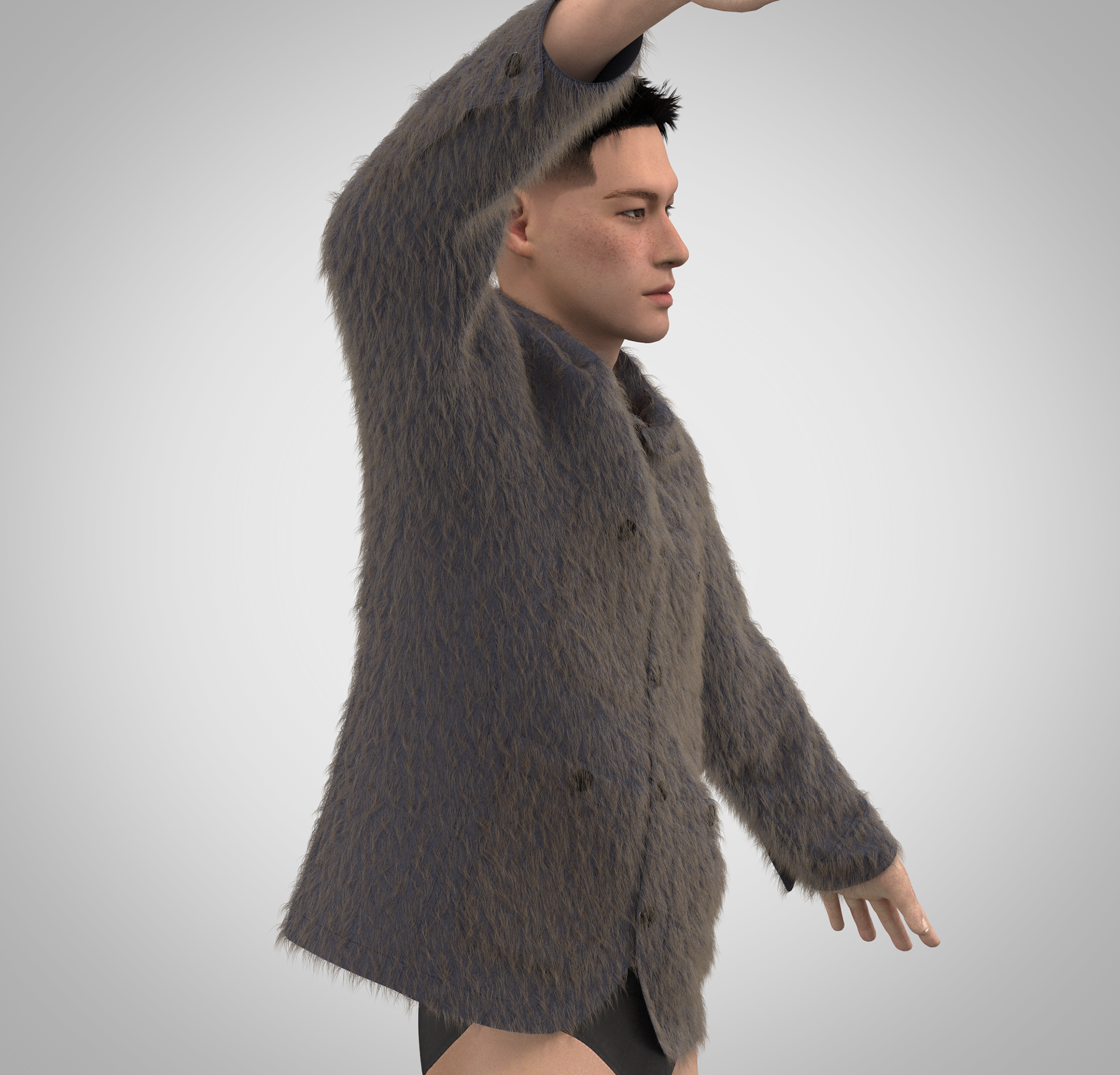
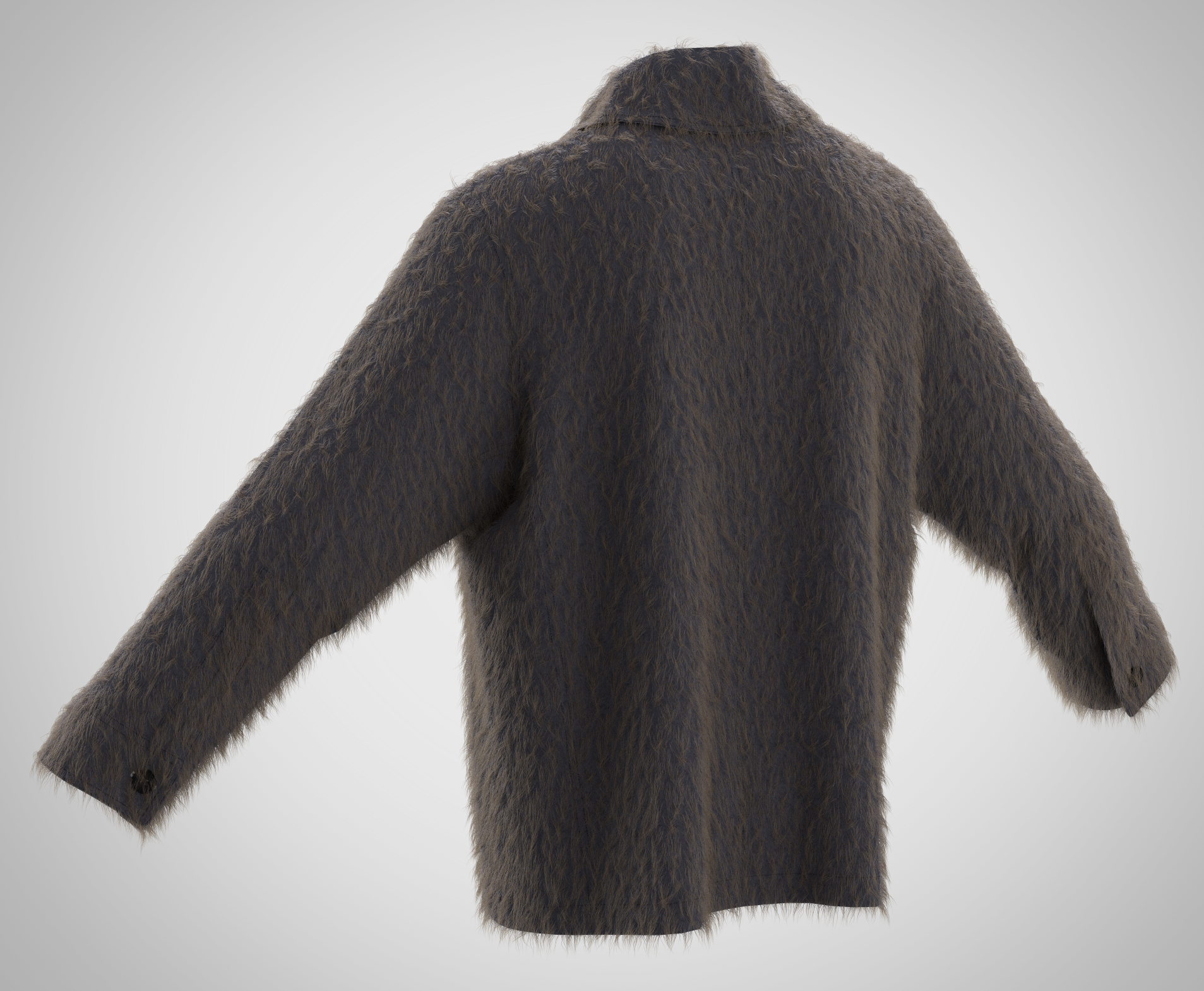
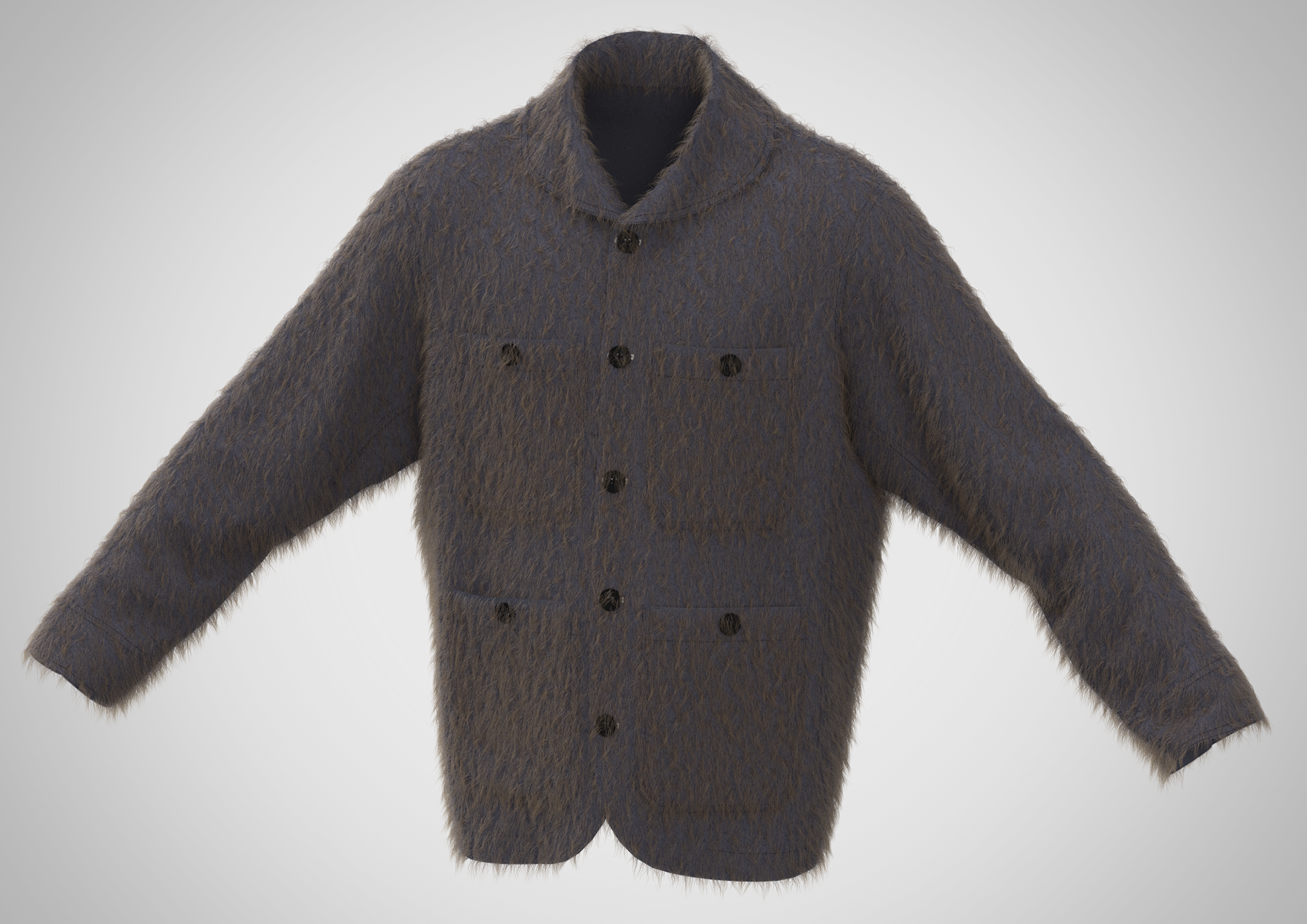
Collection Concept Statement
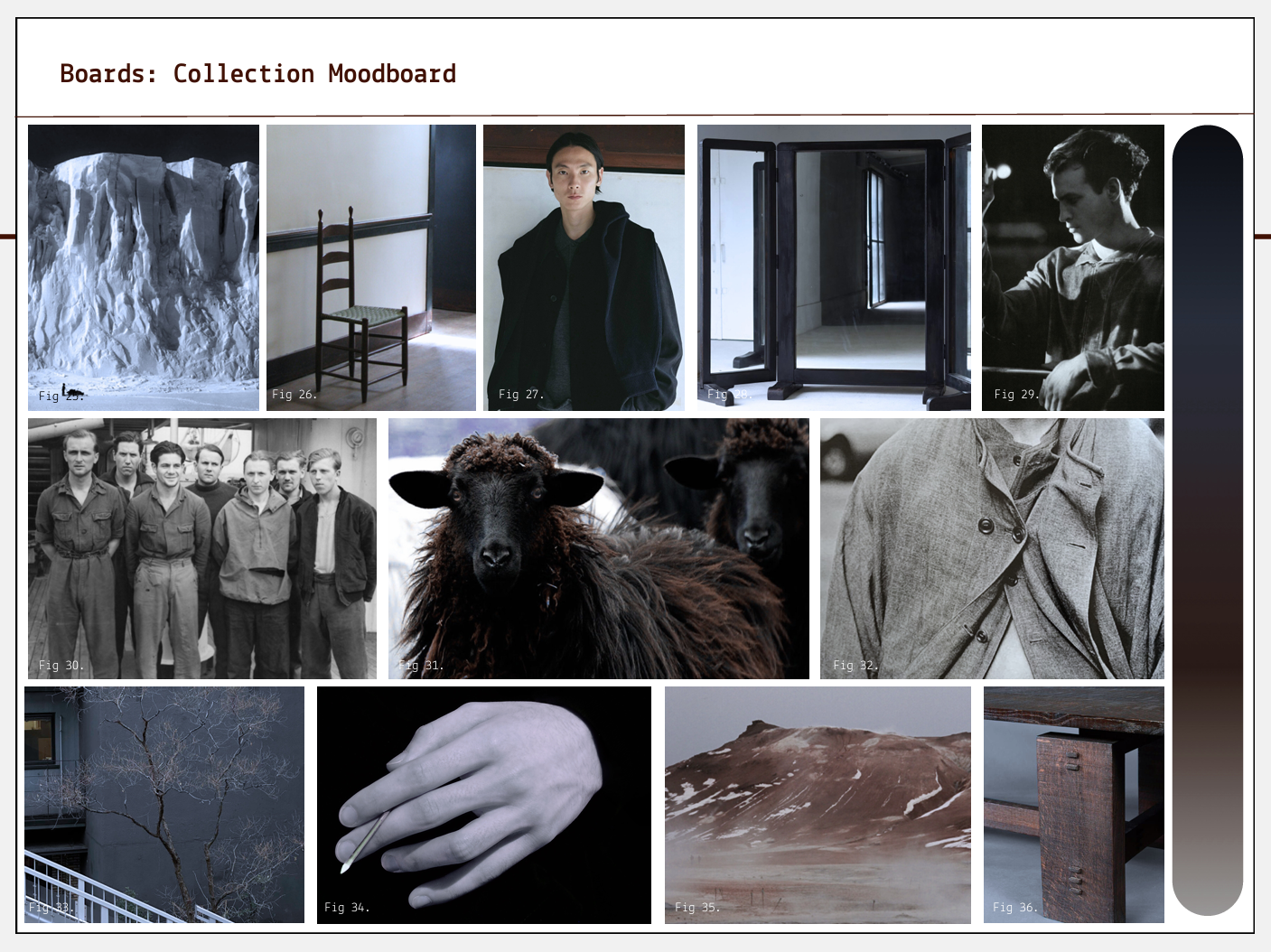
In a rapidly shifting menswear climate, the vintage inspired men’s apparel market has become too captivated by the appeal of fast and cost effective manufacturing, cheaper materials and a disposal of traditional and artisanal methods of garment production.
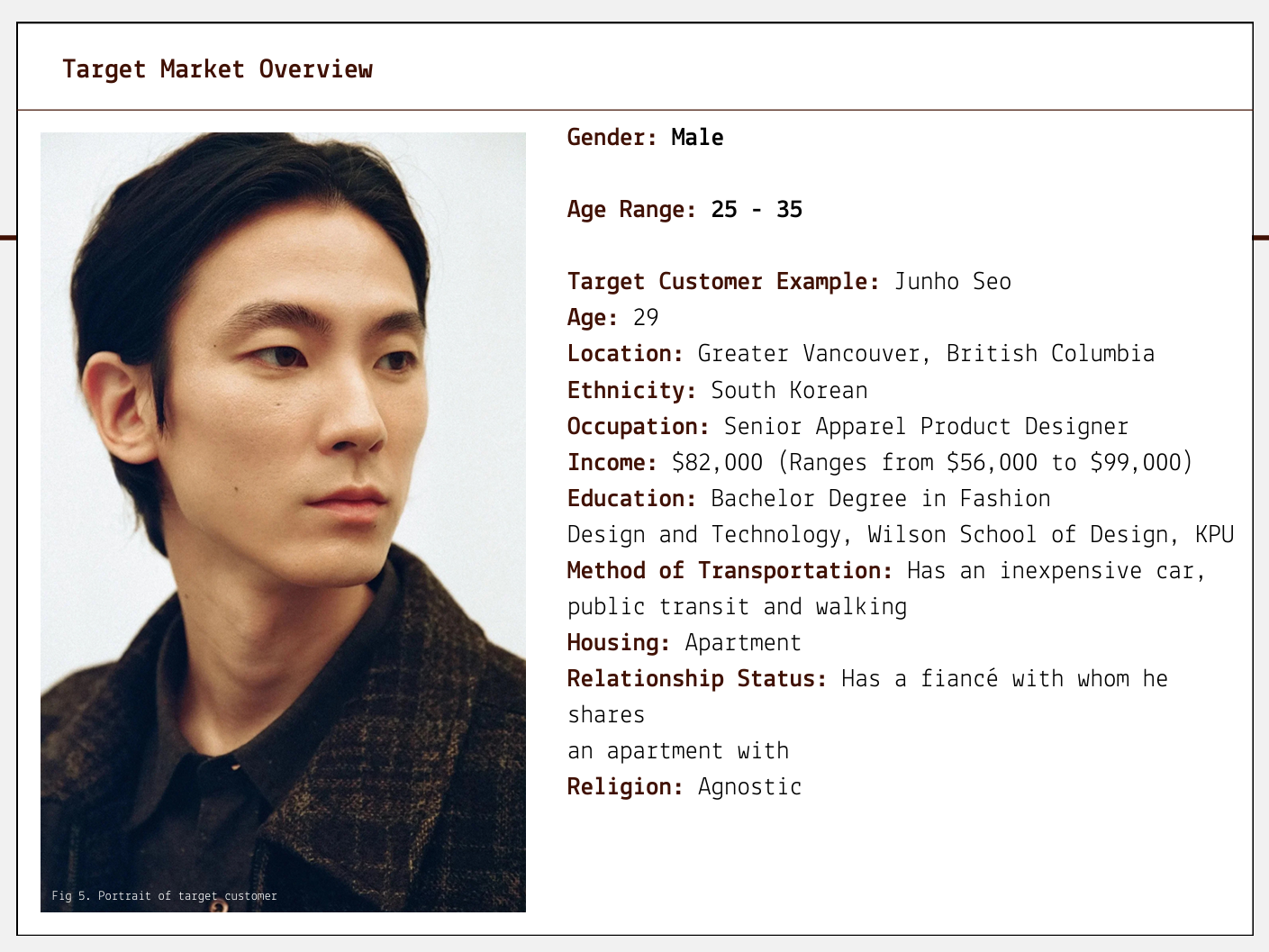
This collection will seek to serve a now underserved detail and fashion - oriented male-based market who prioritize purchasing and wearing high quality, traditionally made and accessible garments that are designed around modern needs, while still prioritizing a vintage design language.
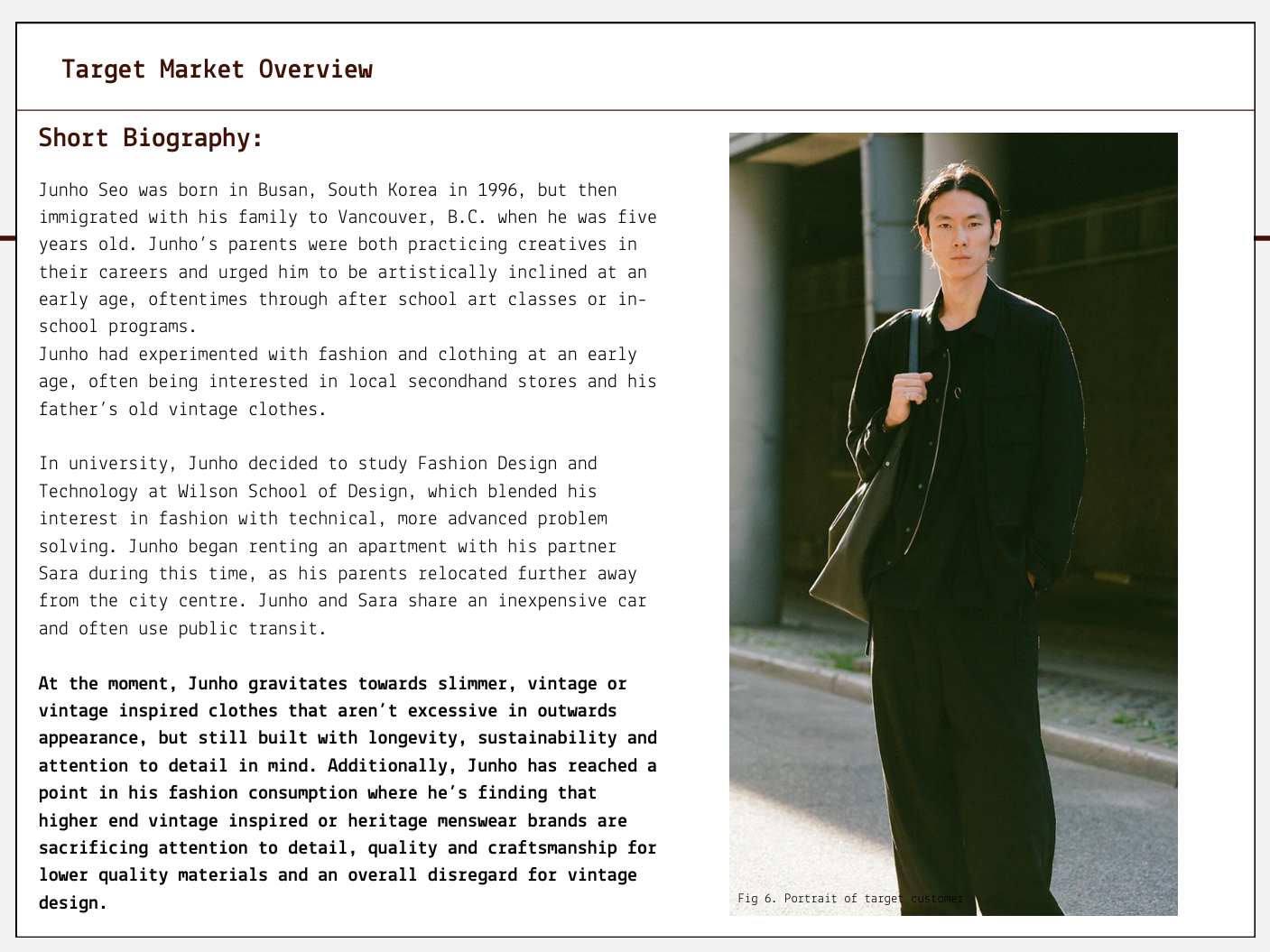
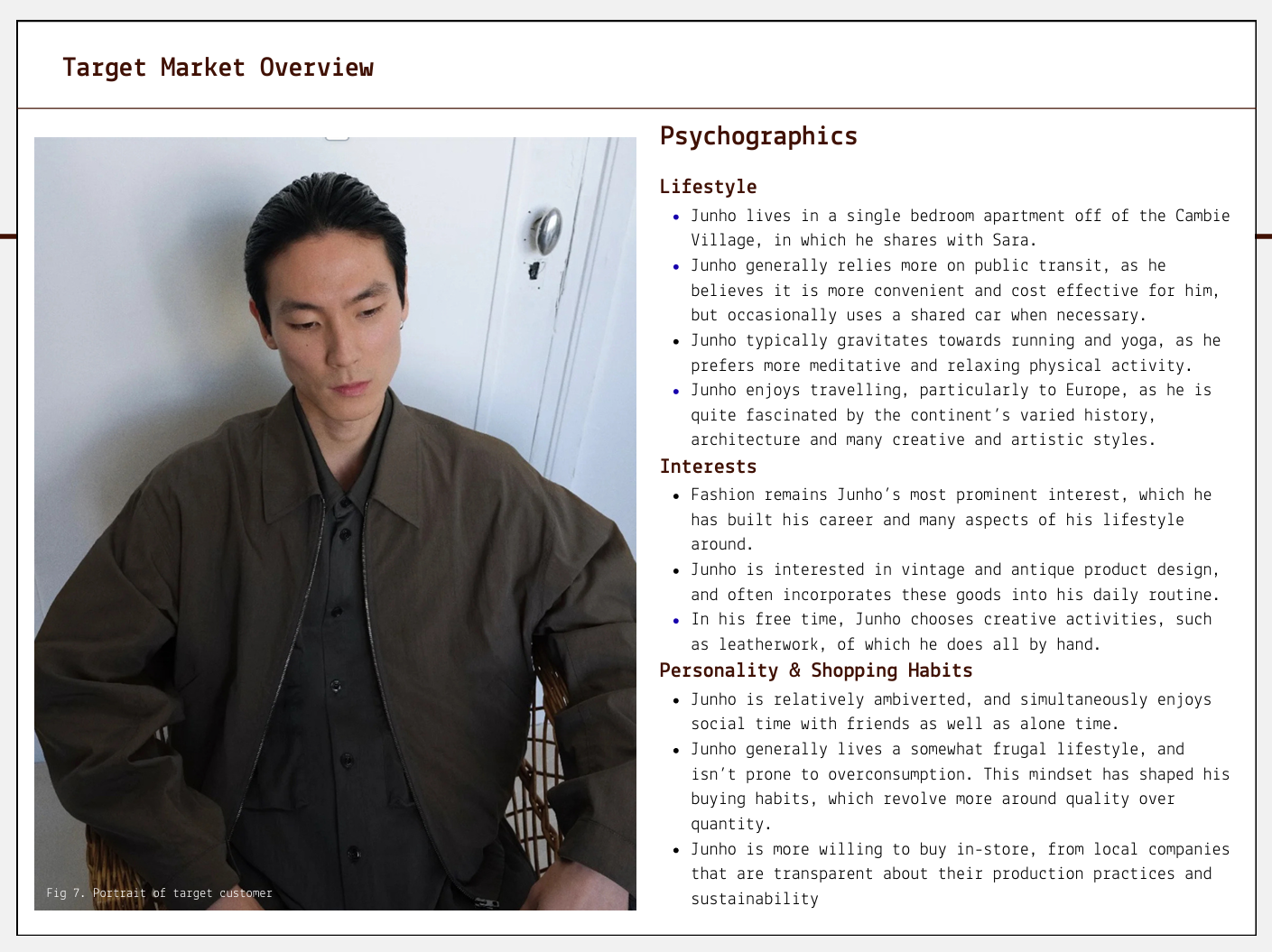
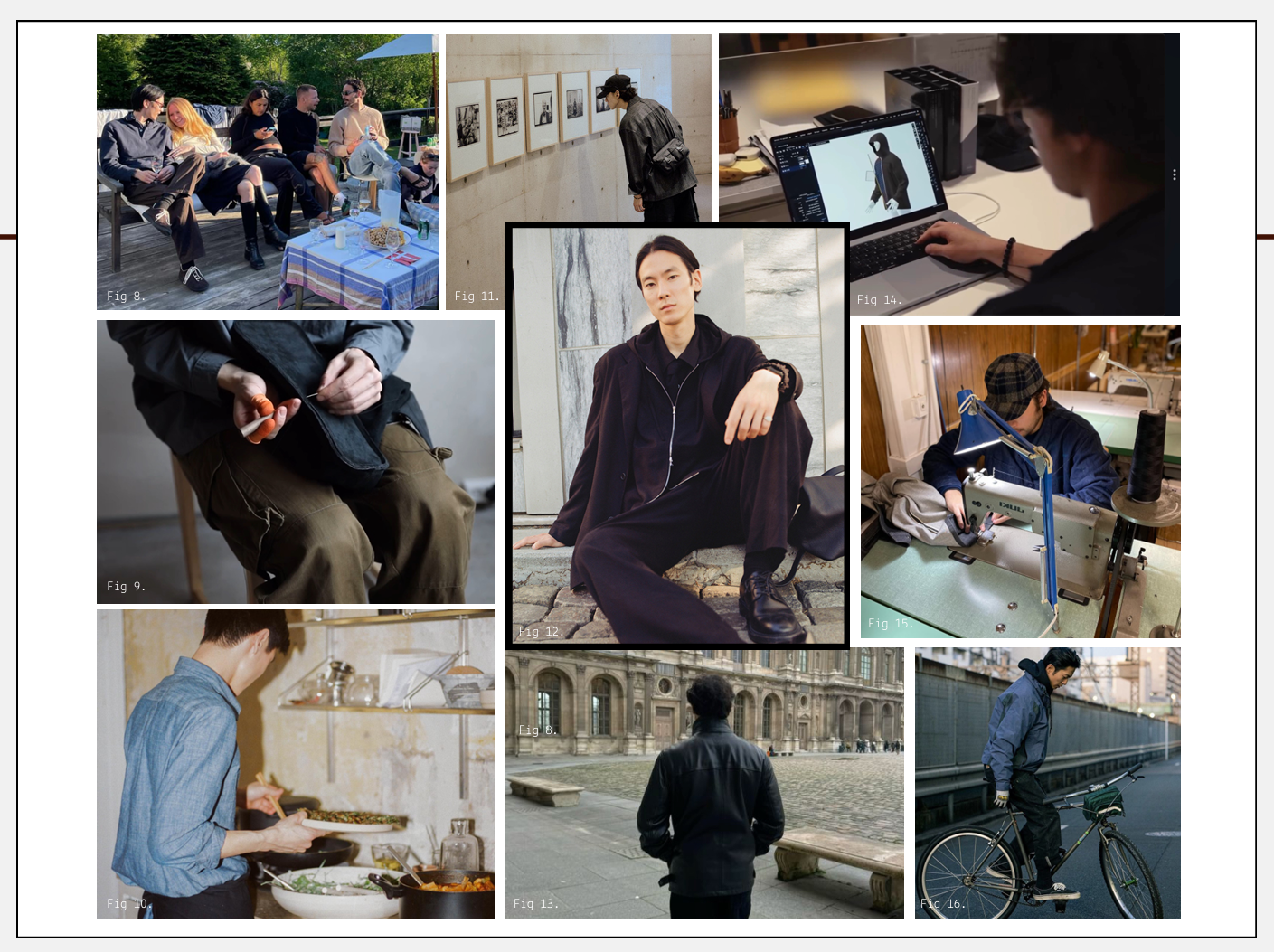
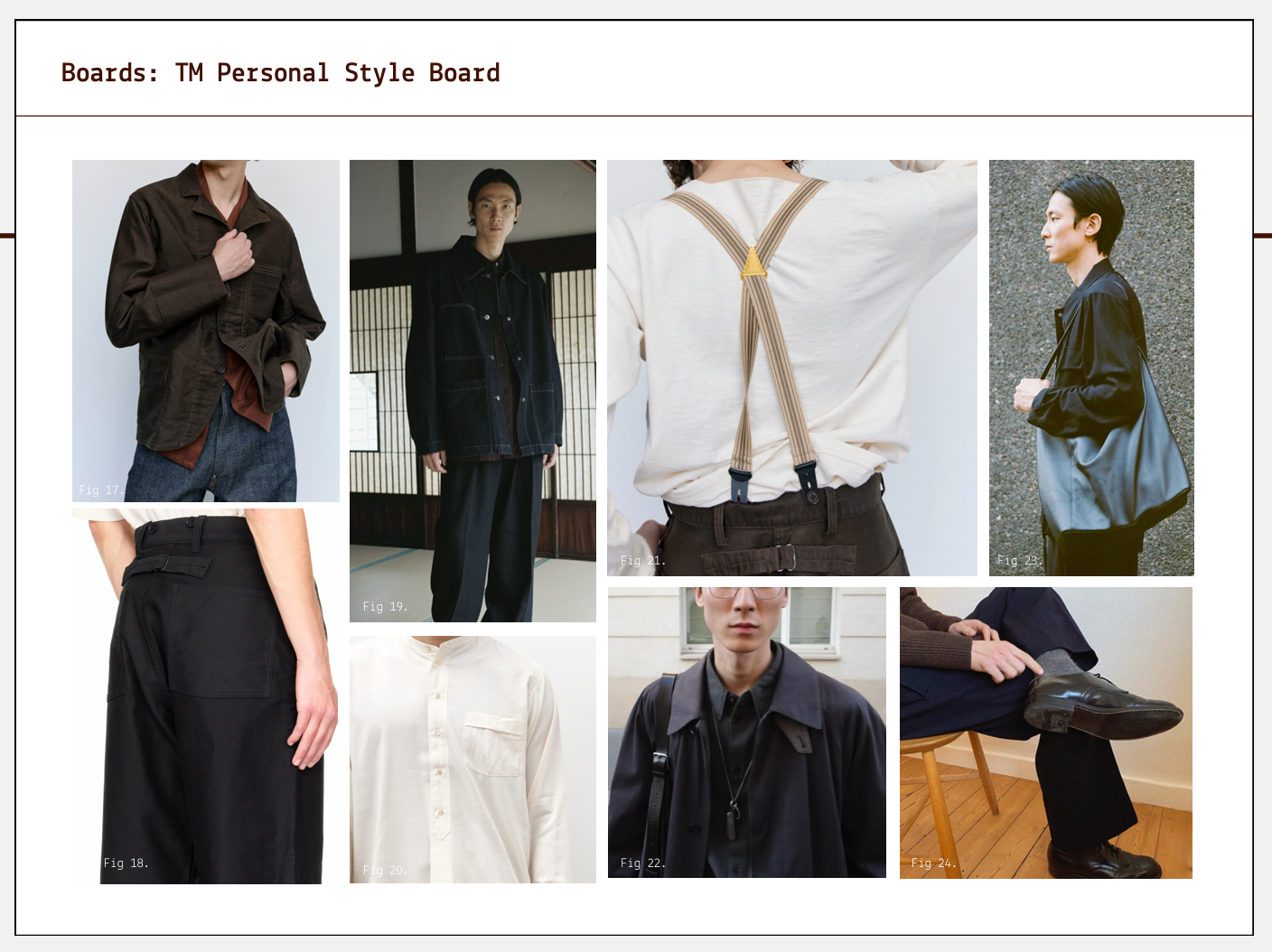
Target Market Research and Boards
Labelling and Personal Branding
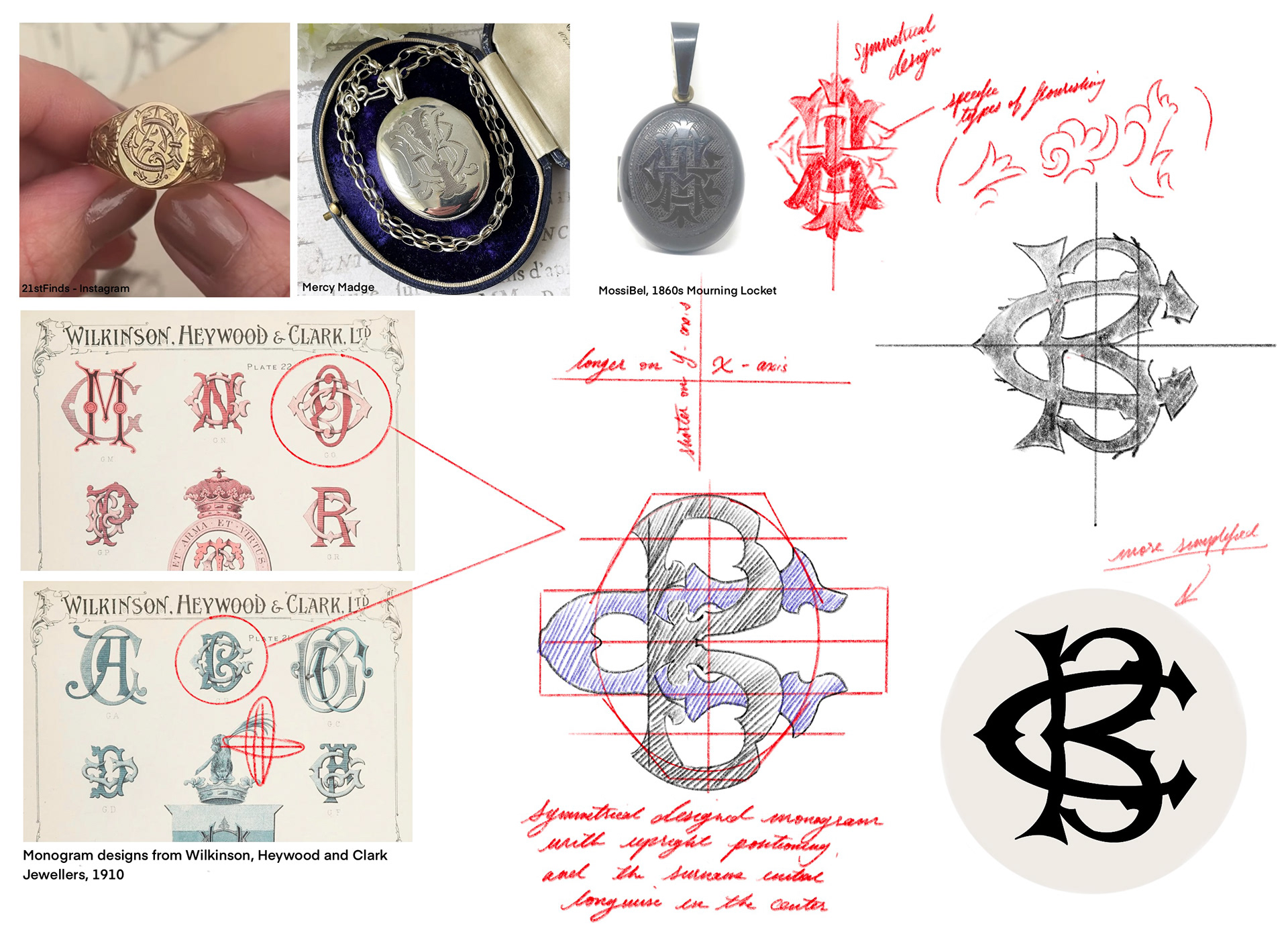
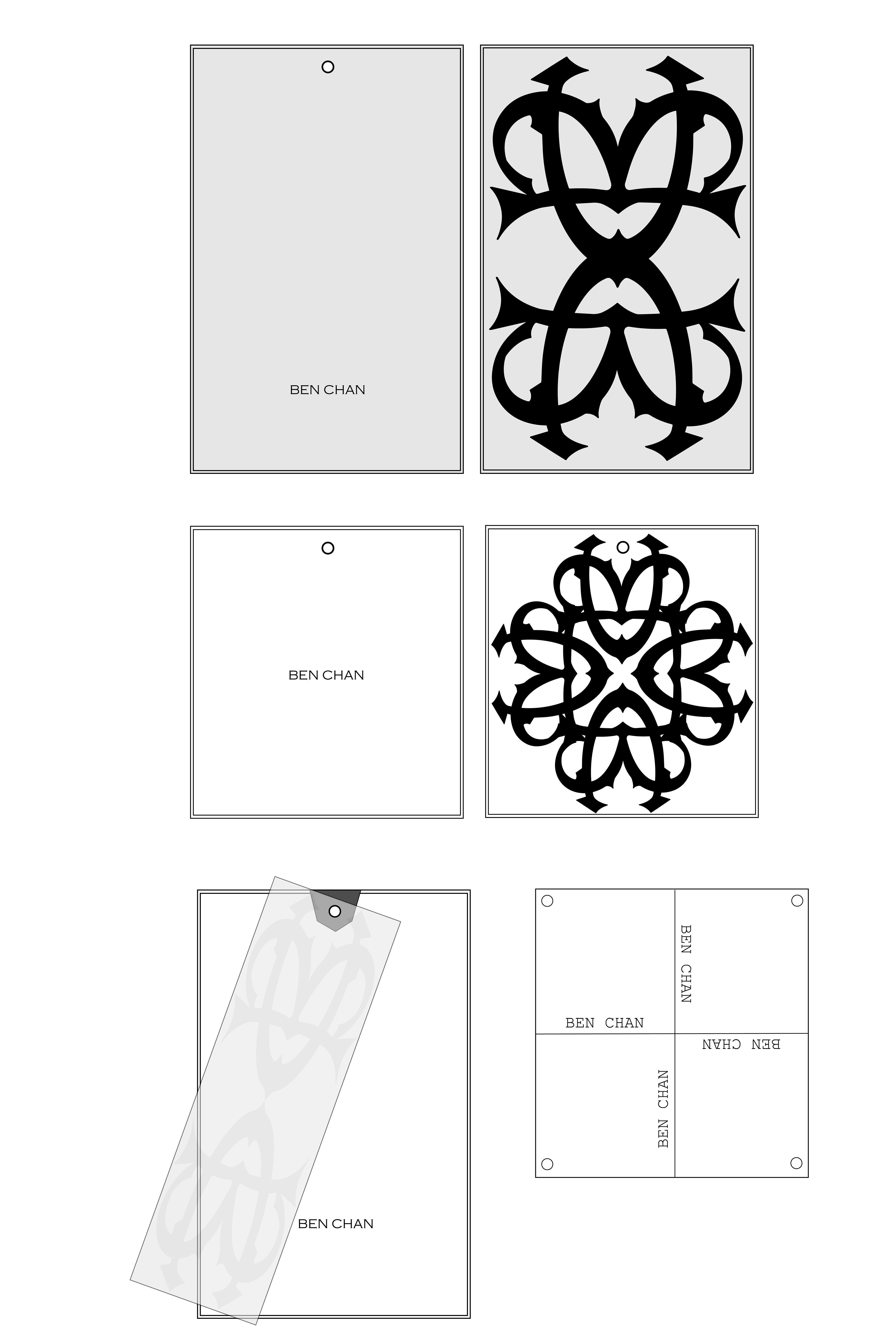
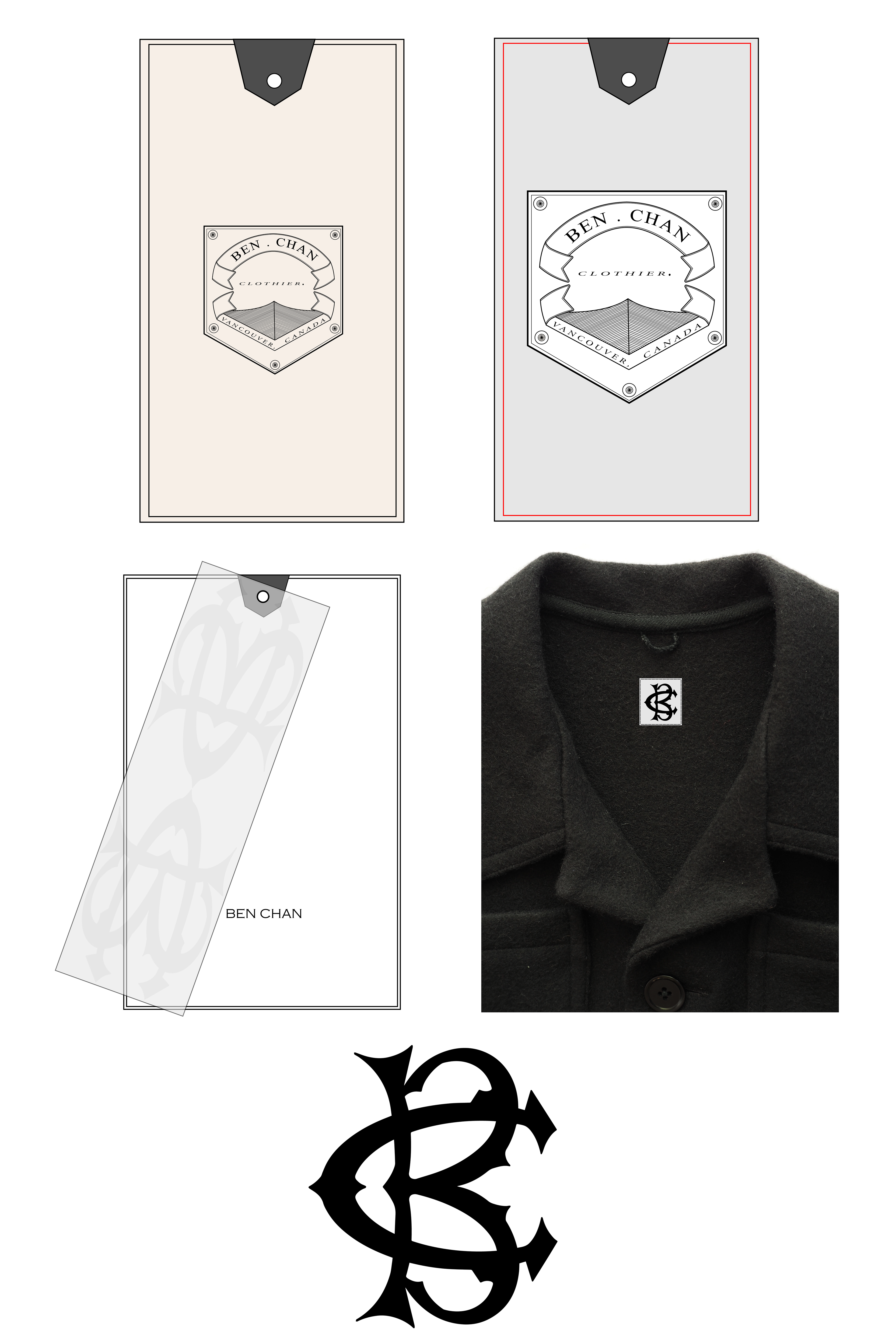
These designs for my personal branding were inspired by late victorian-early edwardian initial engravings, which are commonly found on extant intaglios, carved jewelry, boxes and silverware. i thought that referencing antique engravings was collection - appropriate and deeply personal; drawing inspiration from these period designs aligned with my own collection's vintage design values and was explicitly expressing my brand name.
i produced a few image boards of examples that i sought to draw inspiration from, before engaging in ideation.

Product Sketching
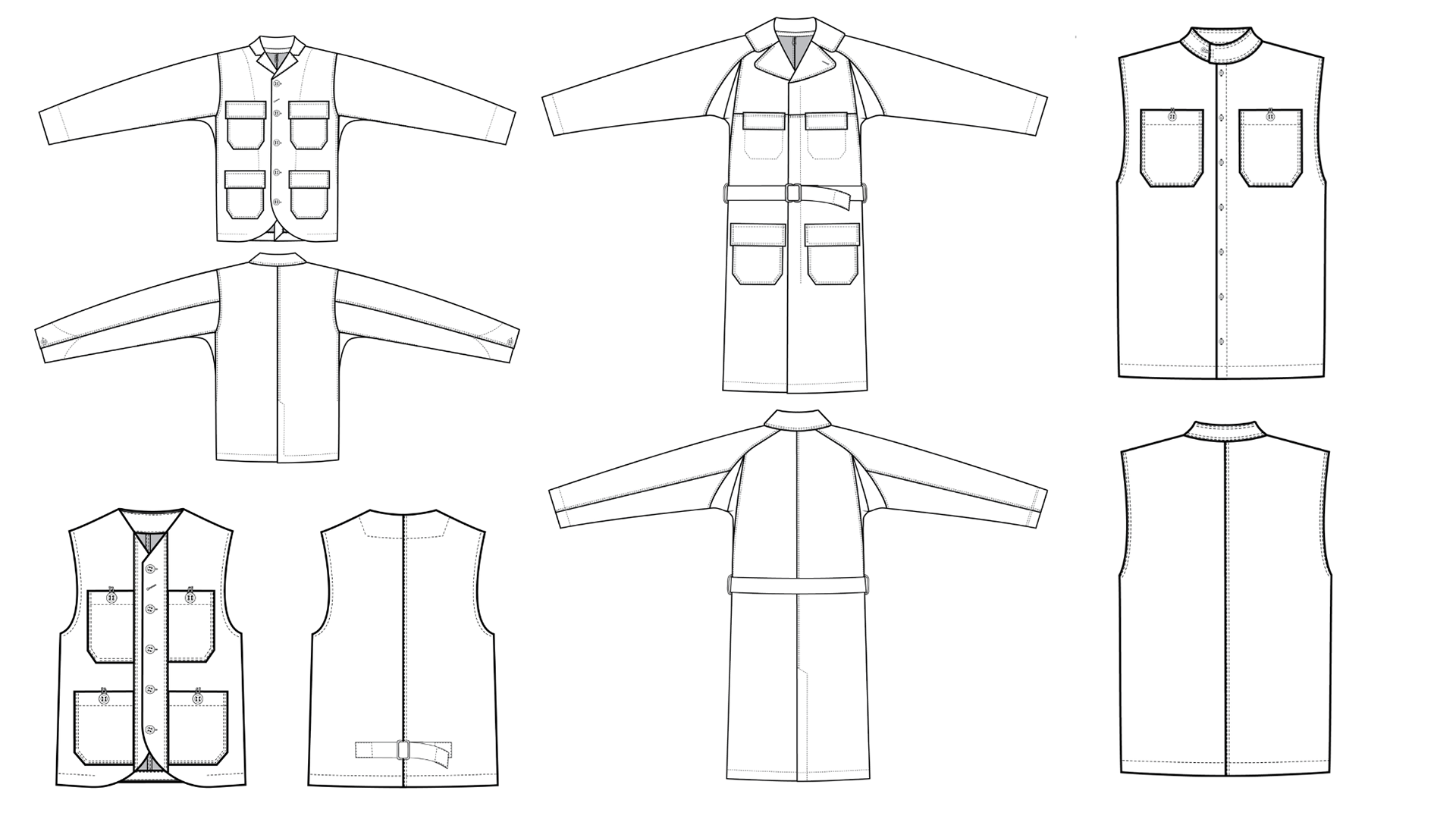
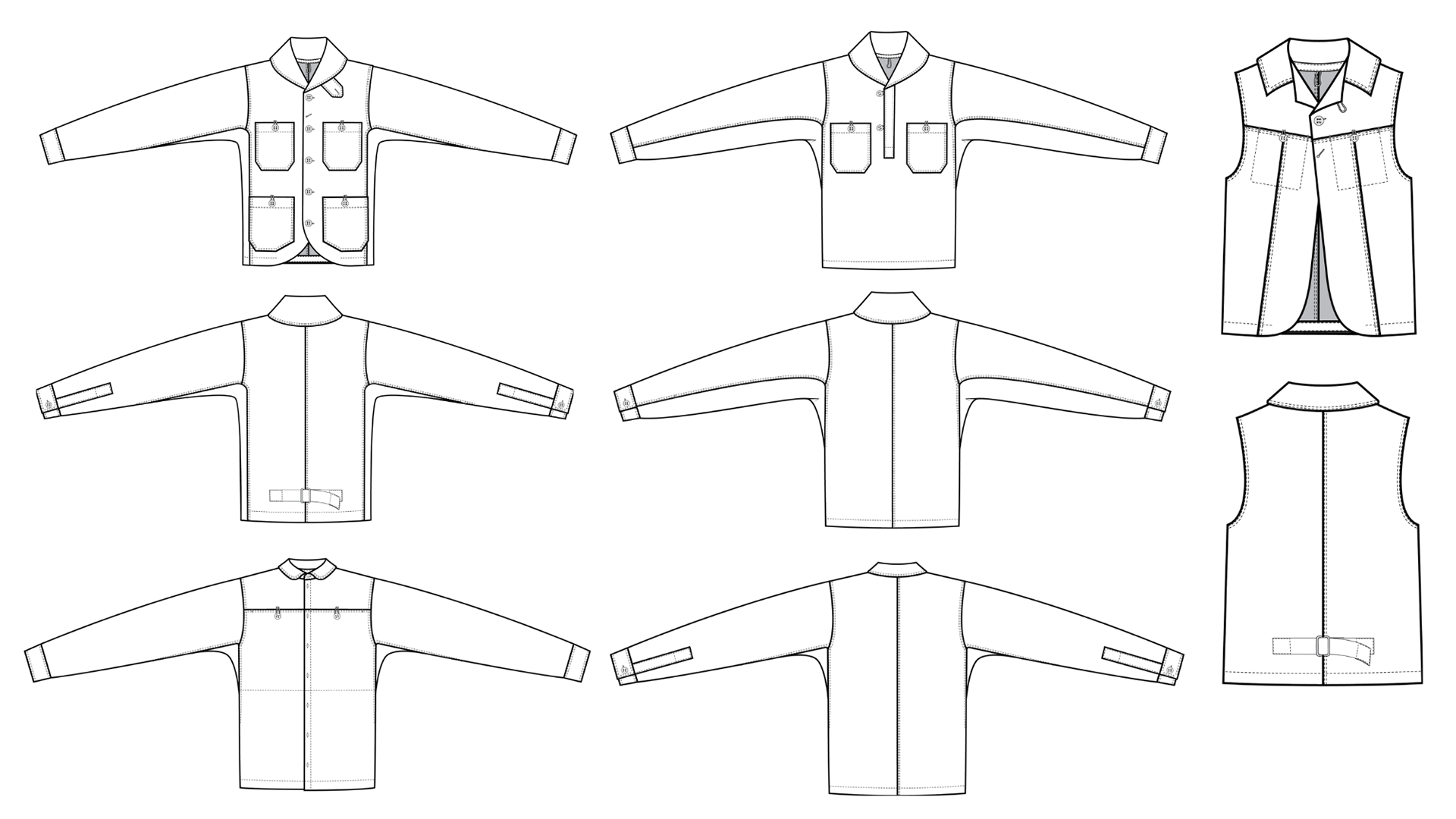
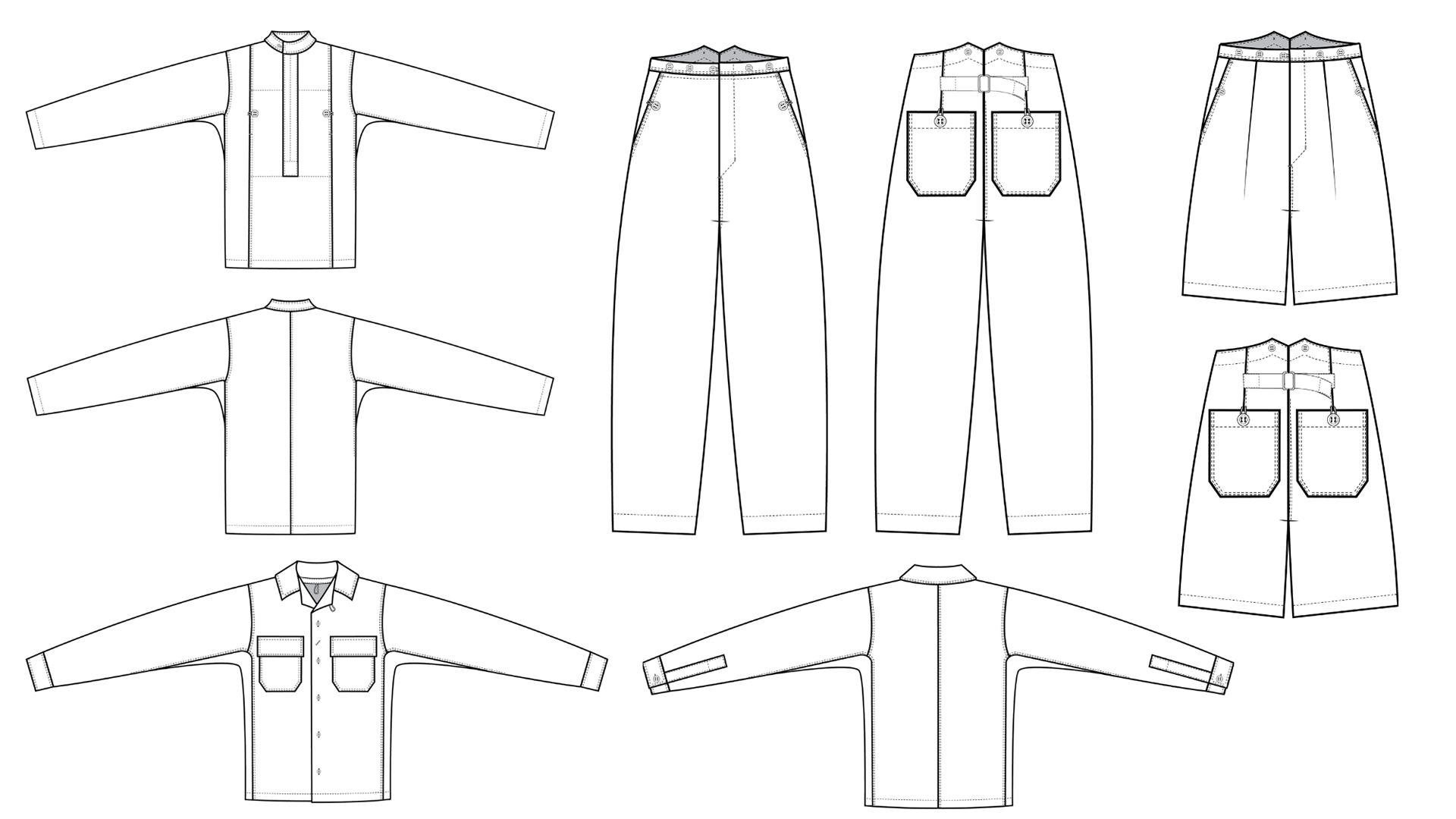
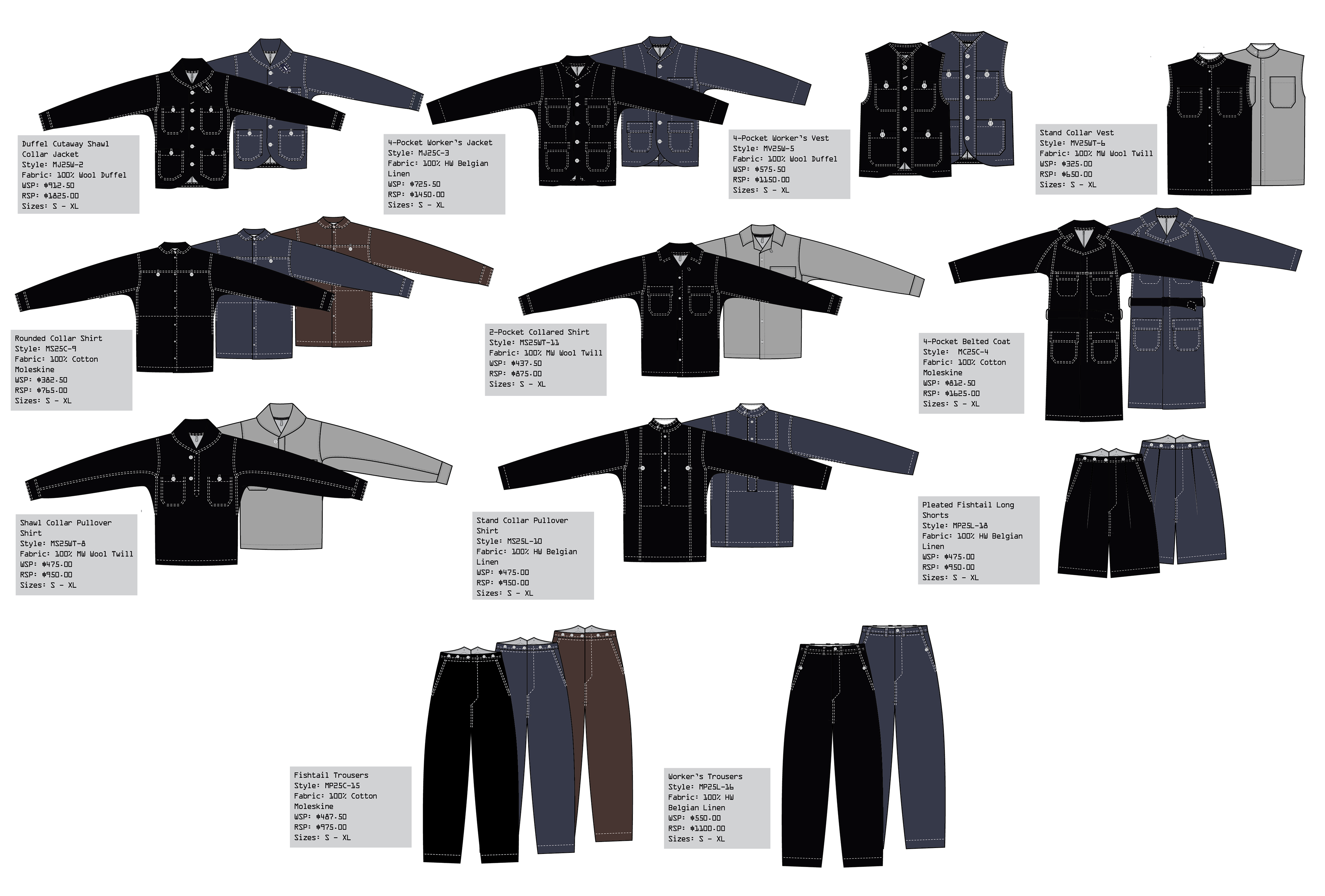
To Begin my process designing my collection's products, I simultaneously referenced my collection boards while loosly sketching in procreate and illustrator. a large component of the ideation phase was to constantly consider how much of each product commodity i had designed, so that there would be a justifiable and even quantity of each product once i had narrowed down my designs to twelve pieces.
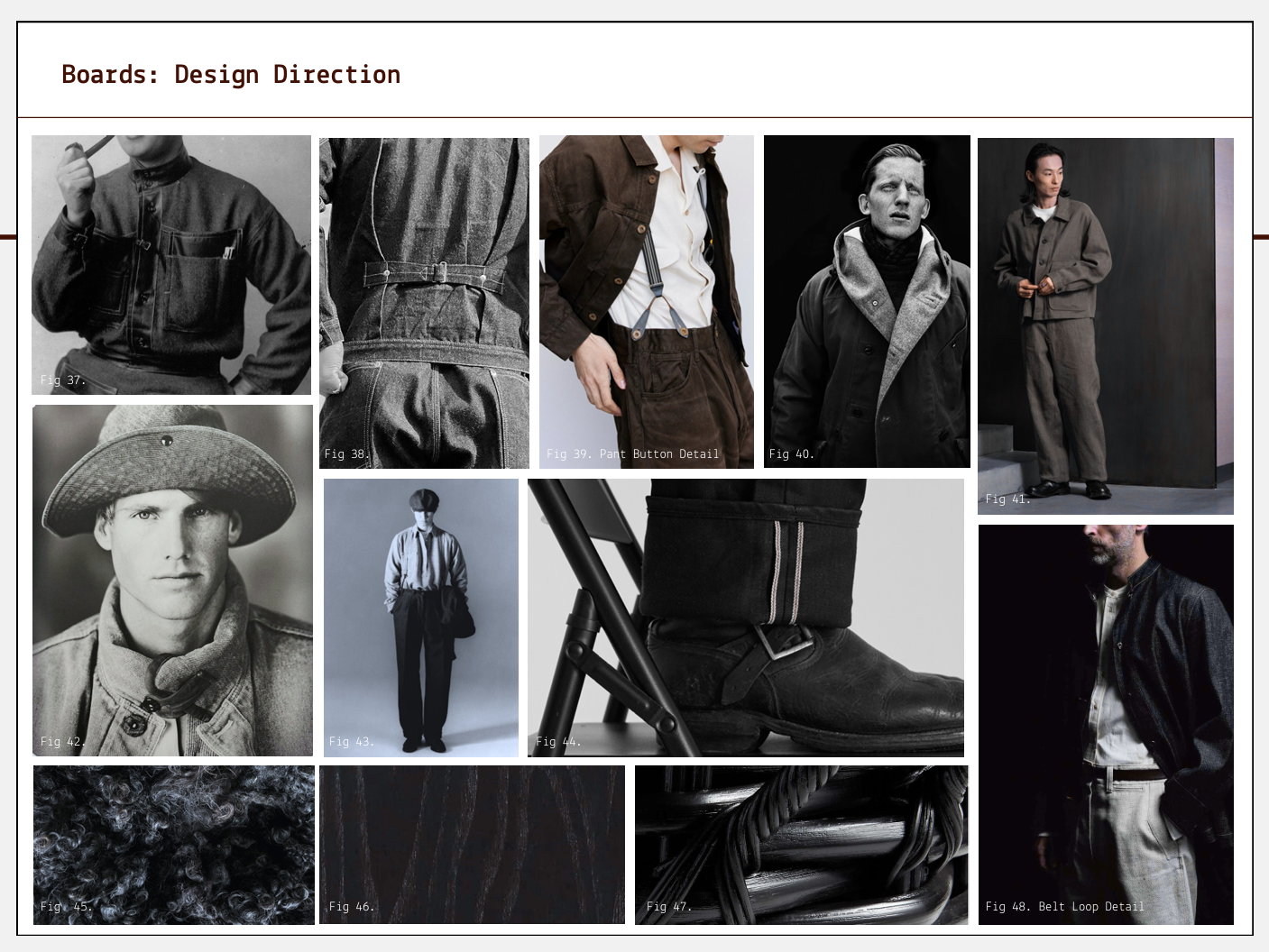
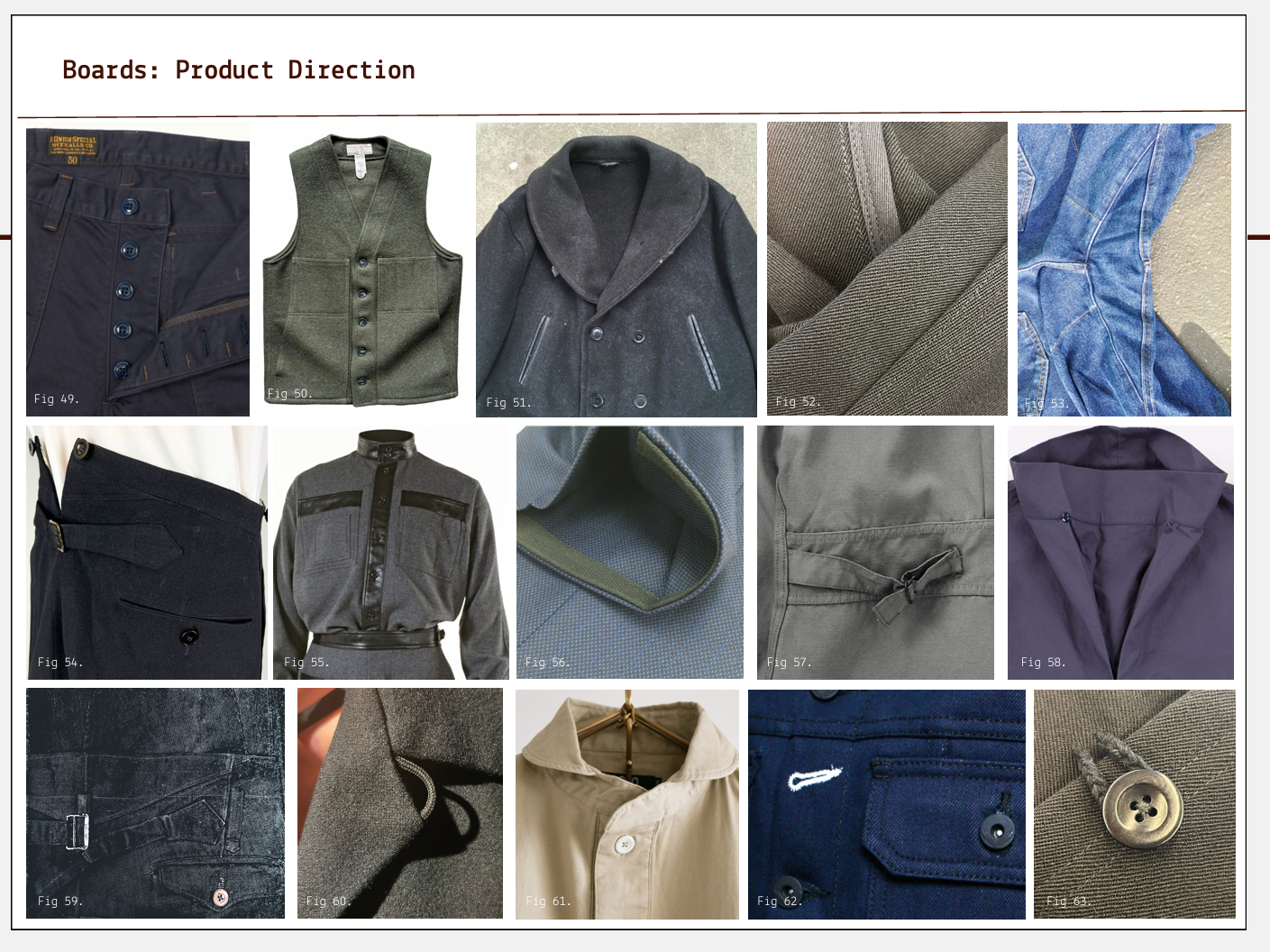
as displayed in my product and design direction boards, referencing vintage garments and design details was extremely important in every step of the product ideation stages, from sketch to final flat. from 1940's french wwII shawl collars on denim cossacks to the way la belle jardinière edwardian fishtail trousers were faced, i ensured that i was constantly researching the way extant garments looked and were constructed, often visiting vintage stores and examining my own collection to ensure that i was accurate.
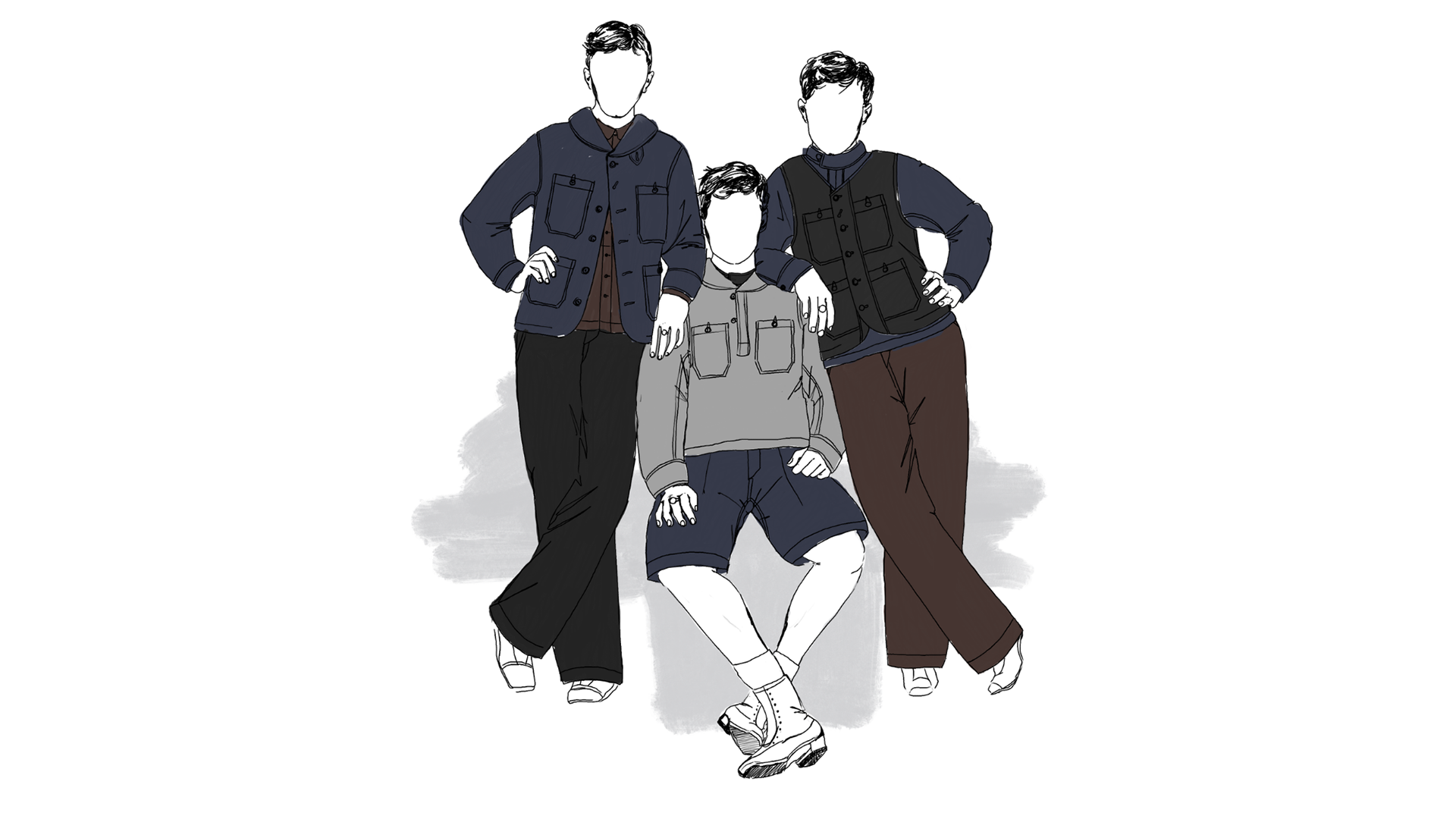
another large component to my design process was keeping in mind collection cohesion, or making sure that every finishing, trim, fabric and colour coordination and design element was carried over into all of the pieces. to facilitate this, i used procreate to sketch some of my products on several figures, to see how the pieces layered together and how they appeared side-by-side. using illustrator for the sketching was quite beneficial, as i had to produce final technical flats anyways and could efficiently adjust my initial sketches all in the same program.
Prototype and Style Card Development
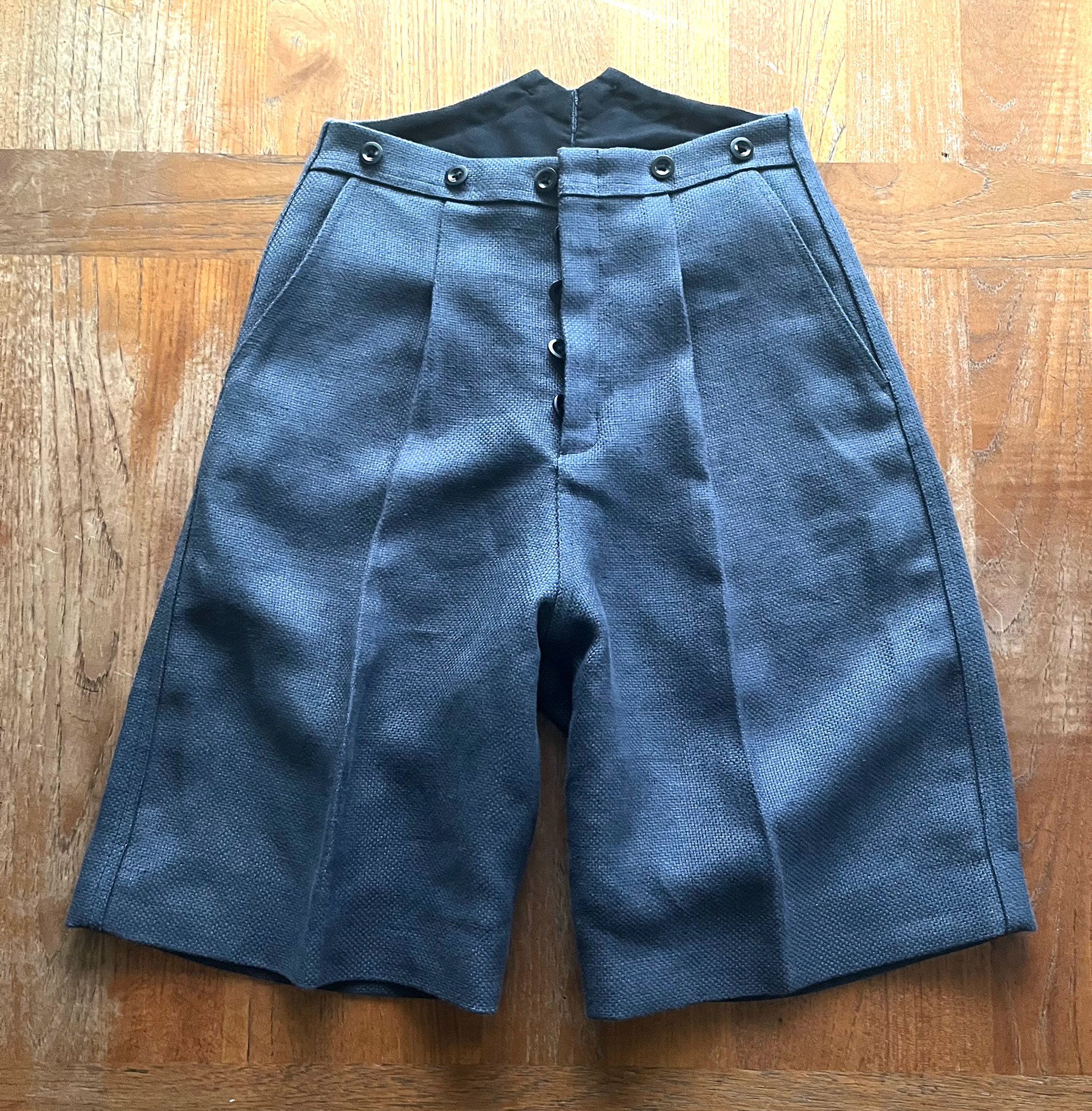
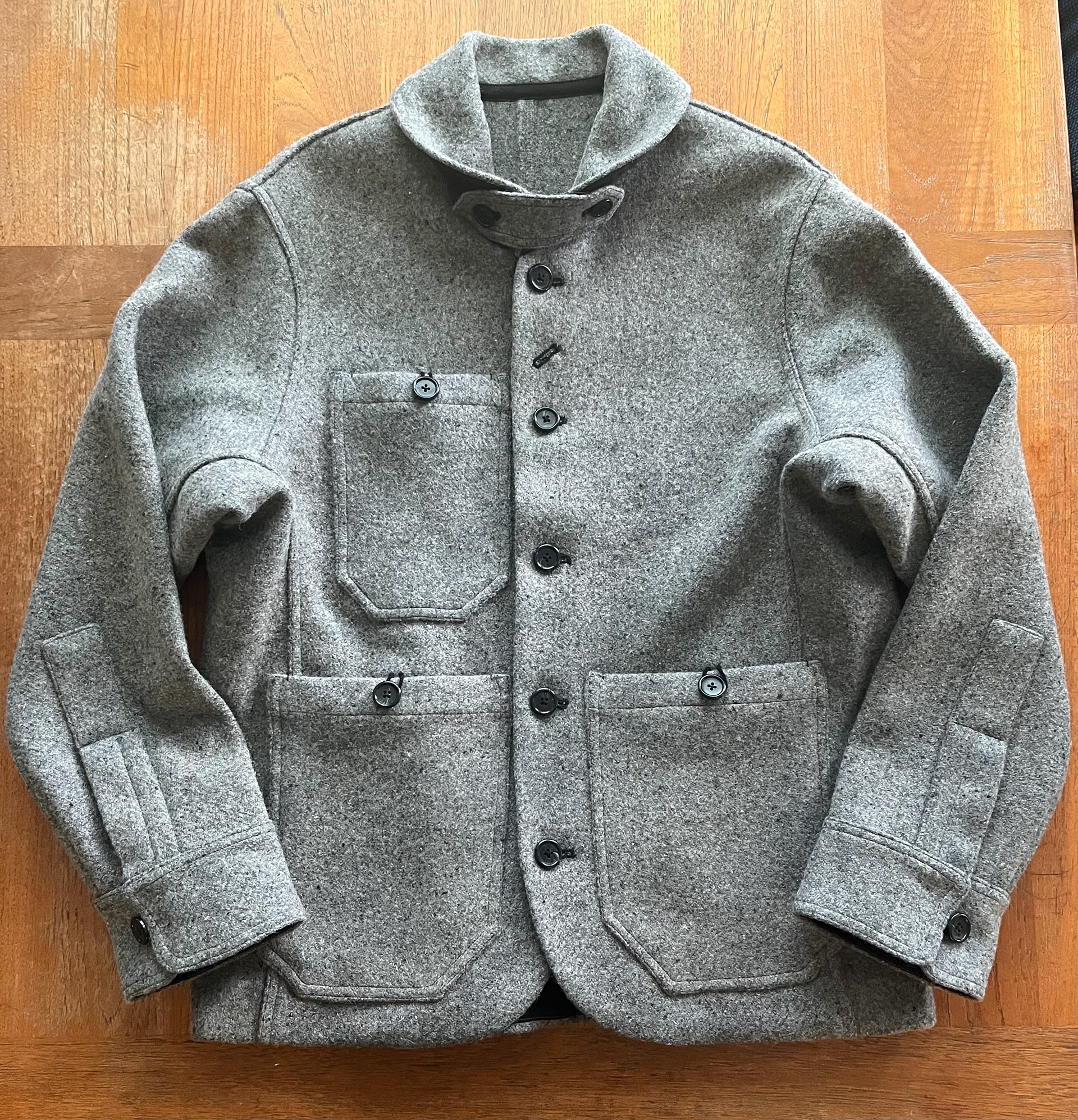
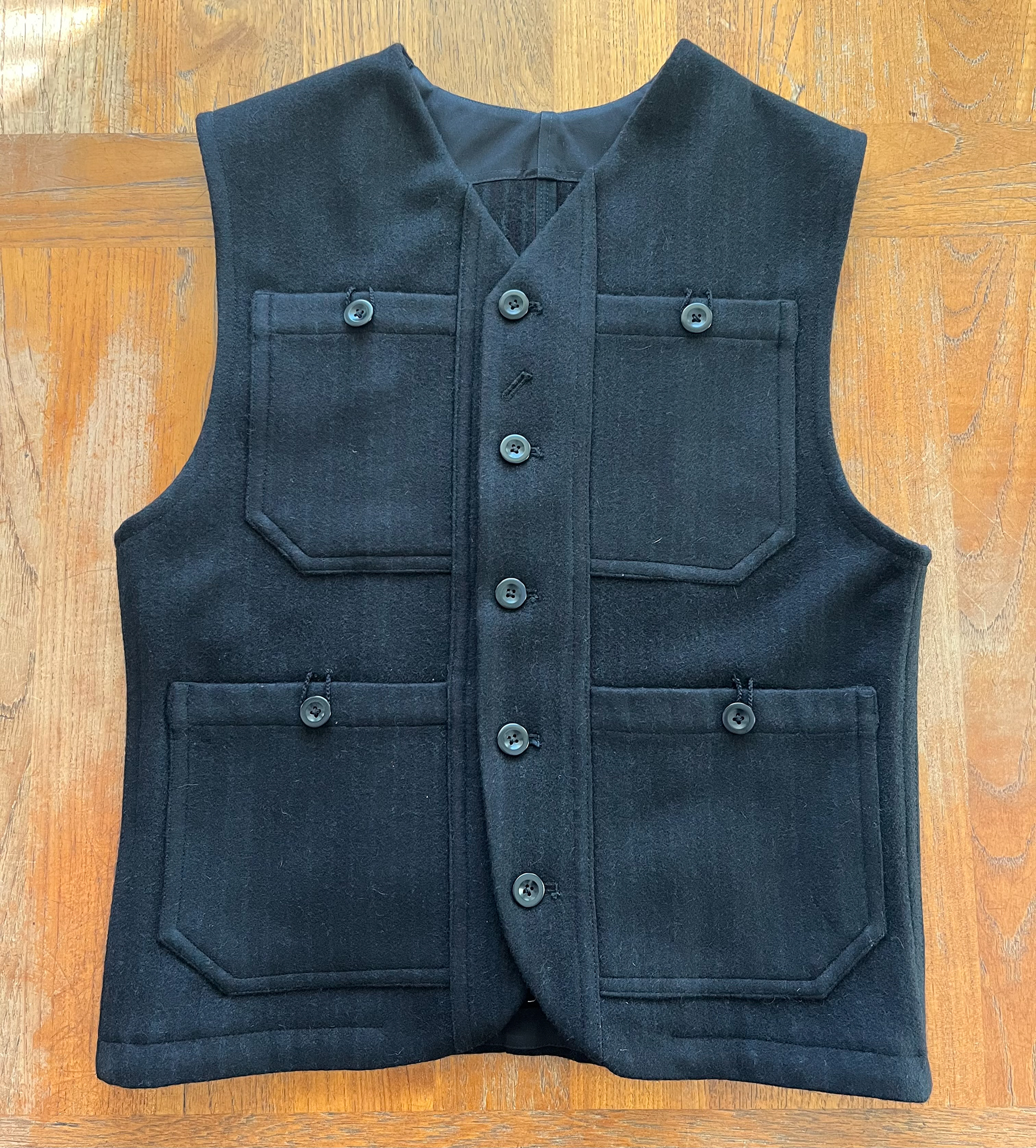
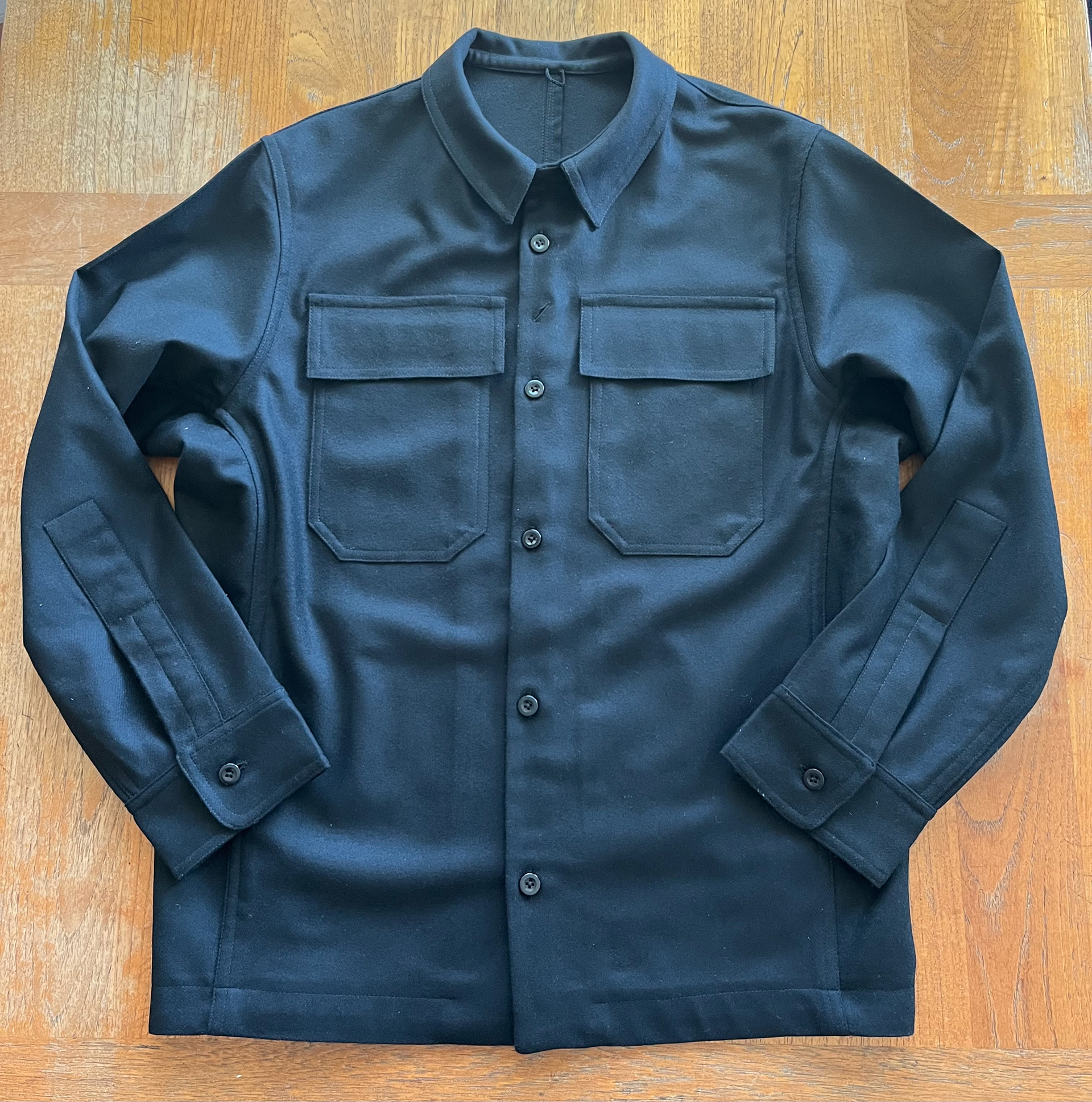
for the actual production of my pieces, i chose a few of them that i would produce prototypes and finals for. the goal was to choose an even amount of pieces from each commodity, so that I could have two full looks on display at the showcase. the patterns for these pieces were completed using my own blocks, which were copied and altered using optitex and traditional patternmaking methods.
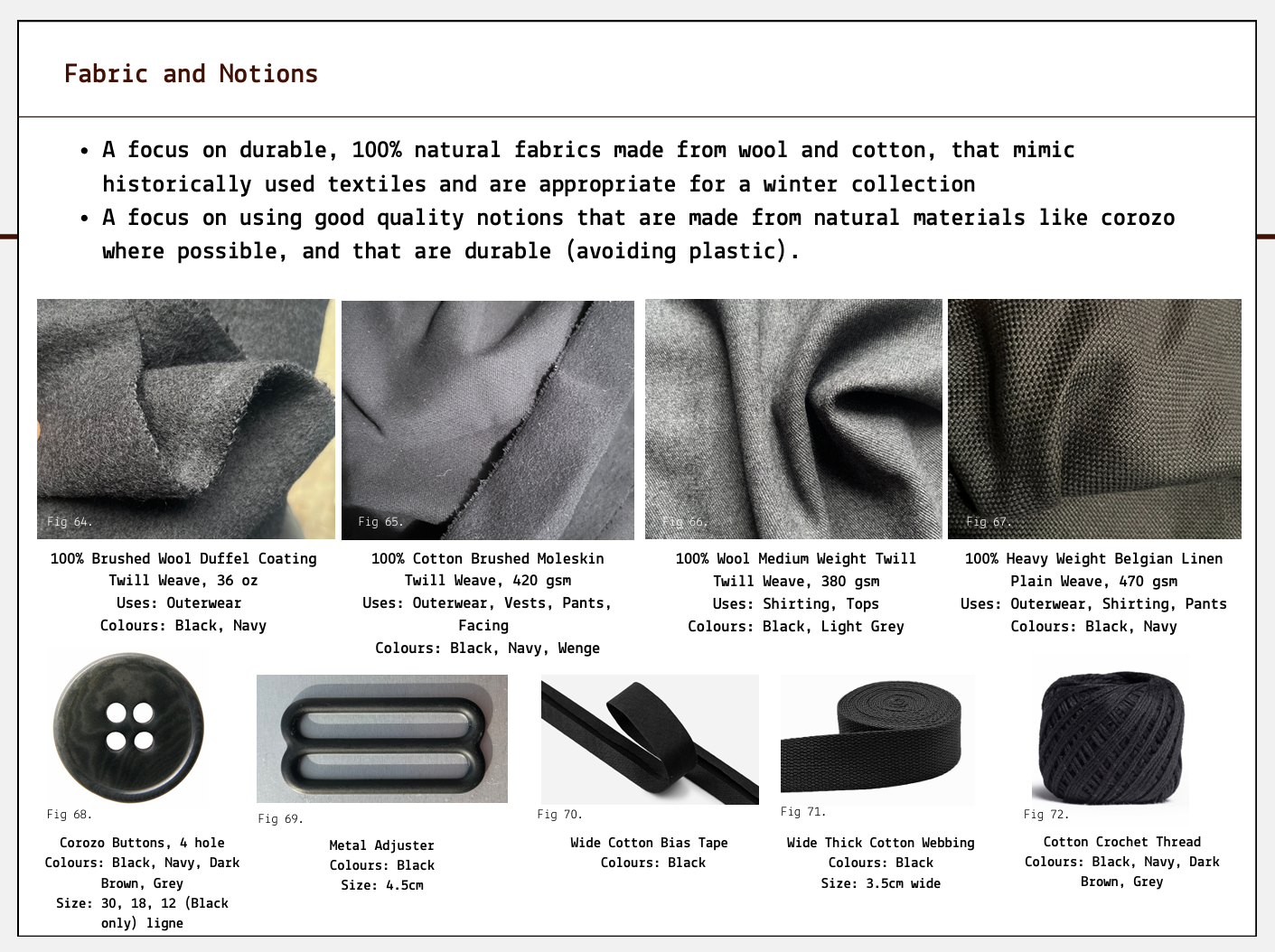
to ensure that my transition from prototype to final garment was as seamless as possible, i used either the exact or a similar fabric in weight and composition for each prototype.
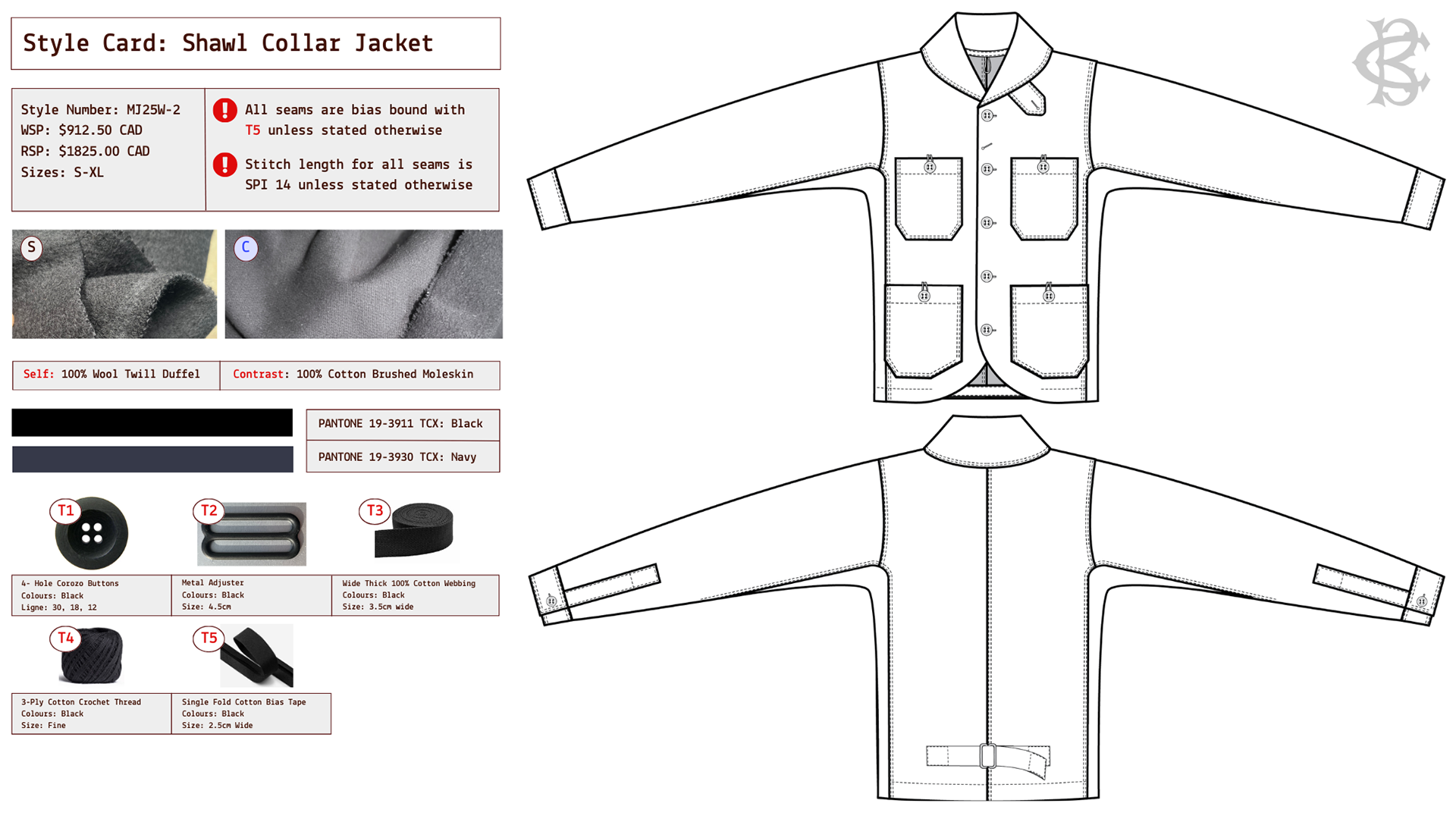
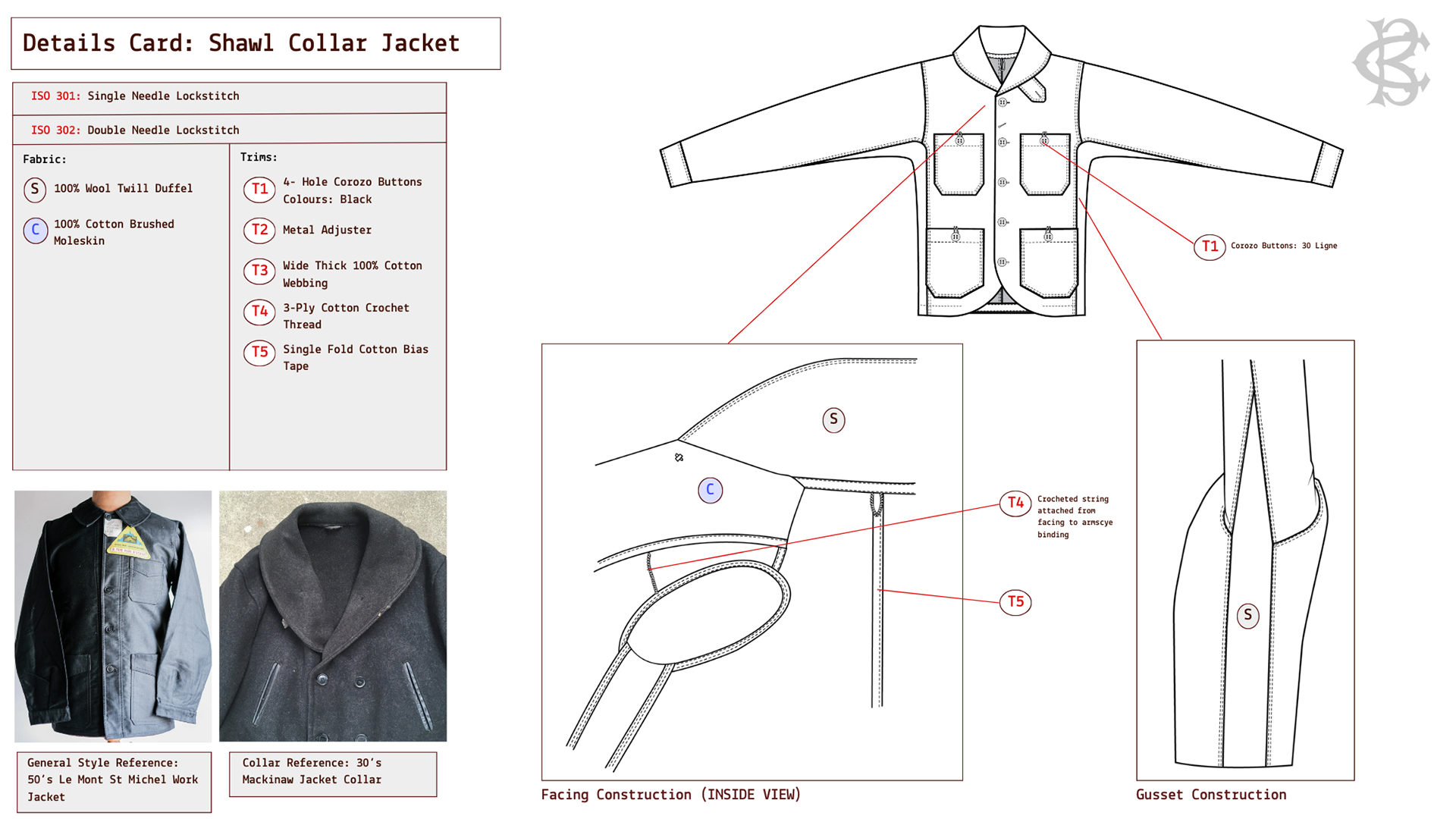
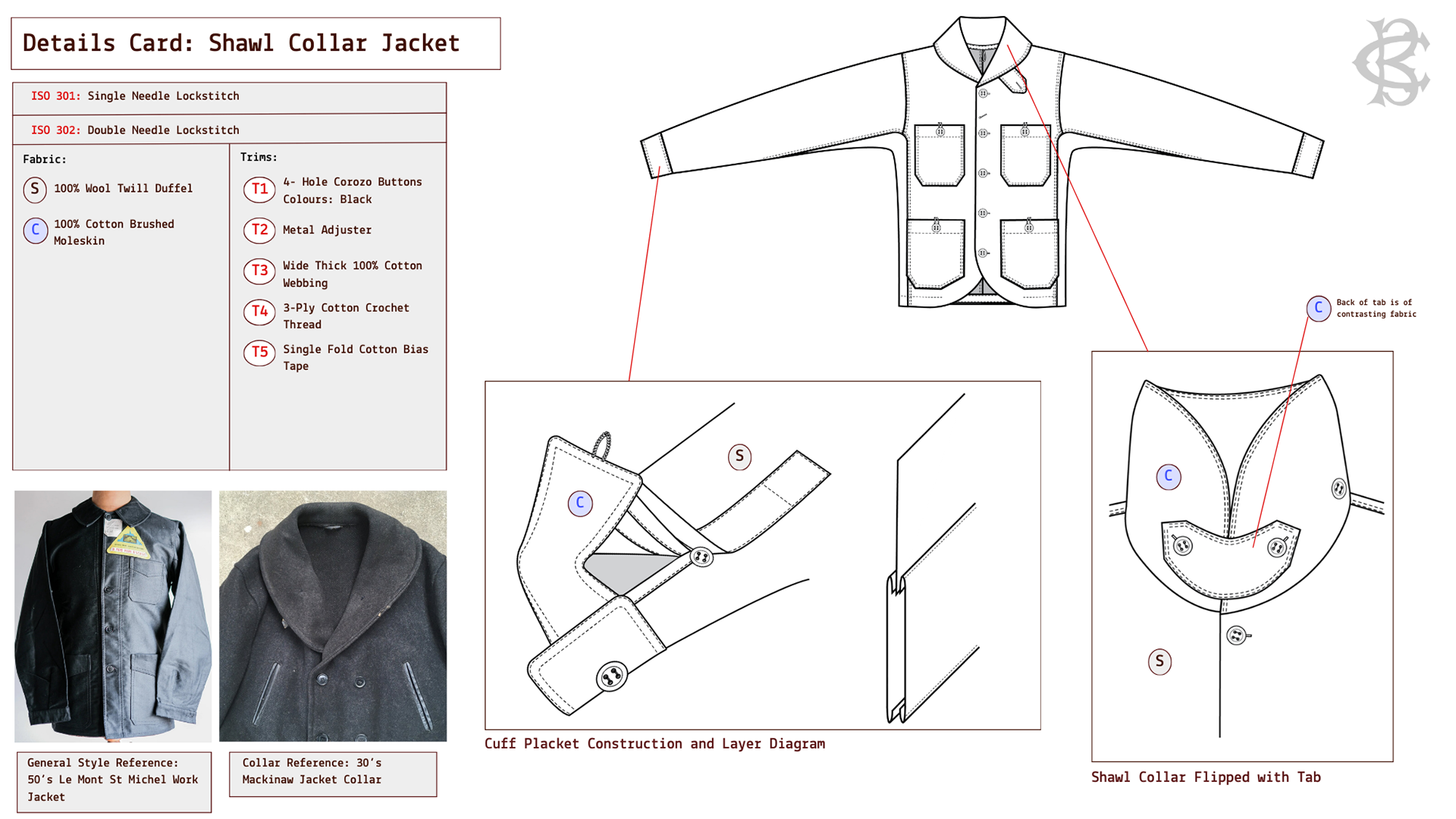
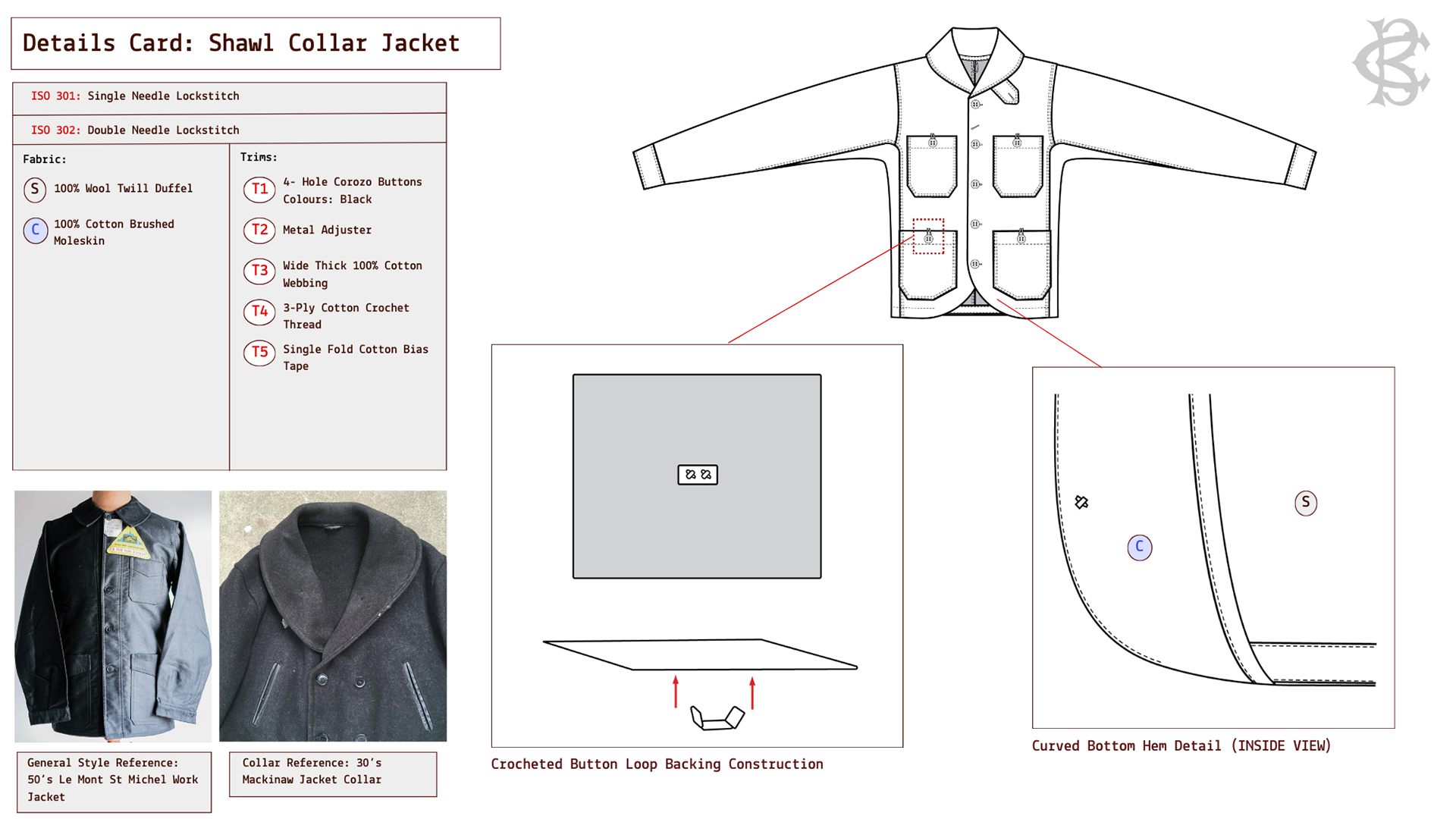
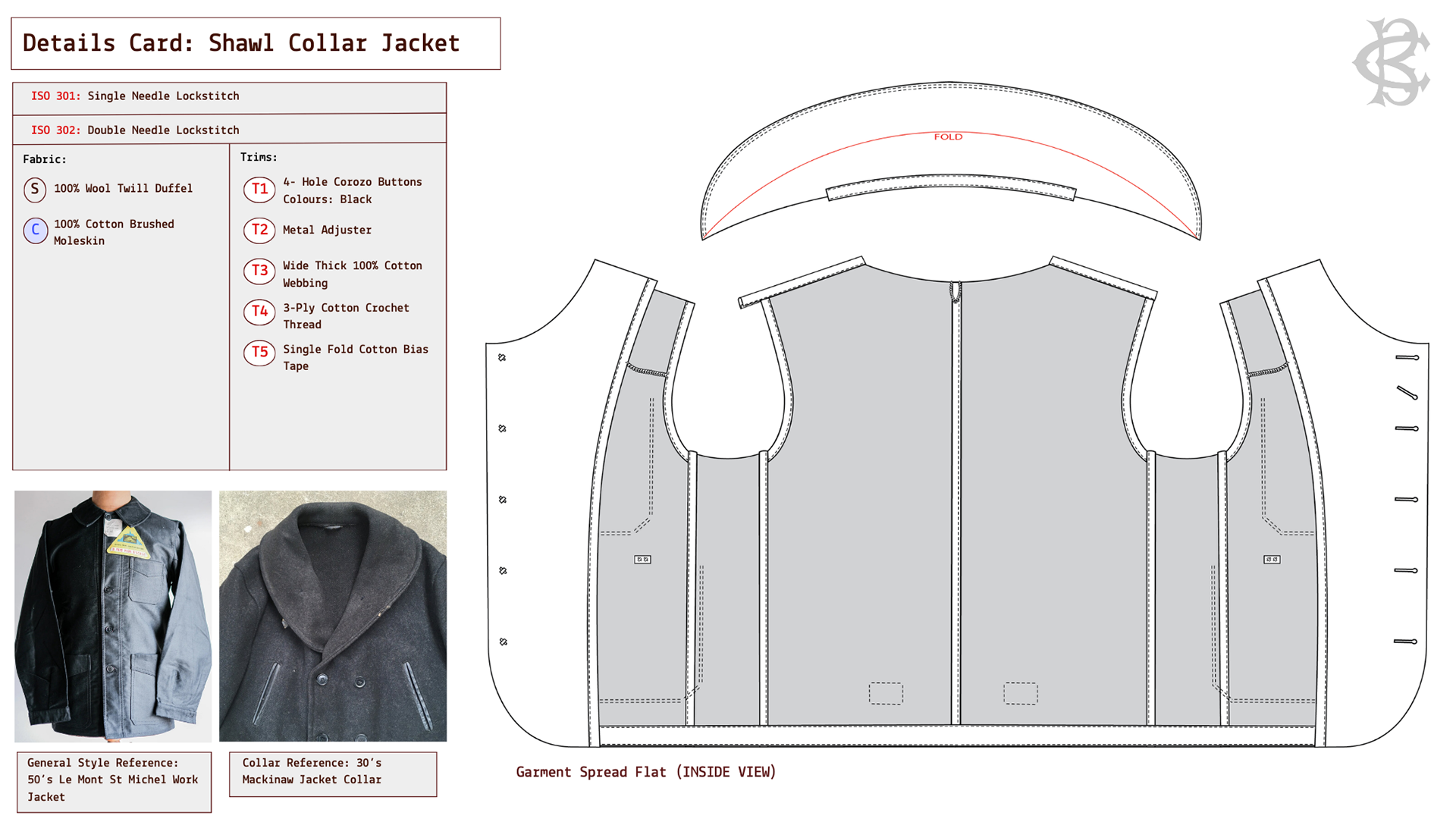
below these images is an example of a style card for my wool duffel shawl collar jacket with detail views and trims indicators.
CLO3D Render
the last phase of my design development process before I began producing my final garments was to use clo3d to test my patterns with similar fabrics to the ones i planned on using for the finals. clo3d allowed me to view the predicted drape of the garment on a variety of avatars and body types, which helped with fit revisions as well as ensuring that my pieces weren't custom-fit.